Showing posts with label Obituary. Show all posts

Thursday, October 06, 2011

So Long Steve Jobs ... You, Definitely, Had Duende ...

For all the riffs we've done here on Apple, there was no denying what a visionary, and genius Steve Jobs was ...


Perhaps, an iconic legacy was spilled on the radio program this morning, 'The Take Away'.


As John Hockenberry, and others, struggled to come up with that iconic thing about Jobs, Hockenberry chimed in with a riff, how, when he shows his two-year-old a photograph, a real photograph, the youngster puts their finger on it, like an iPad, or such, to enlarge it, the swipe, the touch ...


Millions, upon, millions today will be doing that


Not a bad legacy to go out with ...


If he were around today, I think the late writer, George Frazier, would say that Steve Jobs, definitely, had duende ...


RIP Steve Jobs ... Job well done ...


Land of Make Believe- Chuck Mangione, Esther Satterfield & Hamilton Philharmonic


Tuesday, July 26, 2011

Barry Crimmins - "Farewell, Hercules"

I had only met him once.


He was sharing the stage with Barry Crimmins, and, not surprising, Crimmins deferred the "headline" time slot to him, where, for an hour, or so, he strummed his guitar, talked, and joked, with the audience some, in-between singing some serious sweet tunes.


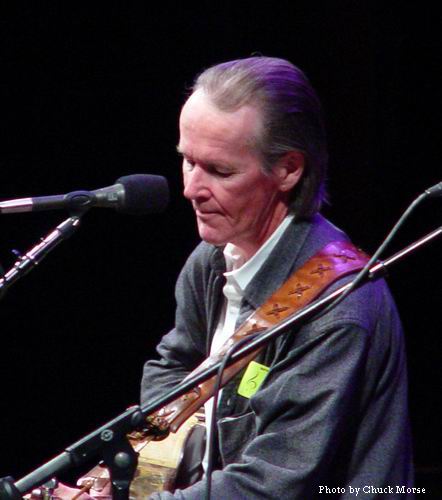
We speak of folksinger, and writer, and all-around cool guy, Bill Morrissey, who passed away this weekend, at the all-too-young age of 59.


This, from Wikipedia;

Bill Morrissey (November 25, 1951 – July 23, 2011) was an American folk singer/songwriter from New Hampshire. Many of his songs reflect the harsh realities of life in crumbling New England mill towns.
Over the course of his long career, two of Morrissey's ten albums received Grammy nominations and several have earned 4-star reviews in Rolling Stone as well as equal accolades in other major national publications.[citation needed] Stephen Holden, for the New York Times, wrote, "Mr. Morrissey's songs have the force of poetry...a terseness, precision of detail and a tone of laconic understatement that relate his lyrics to the fiction of writers like Raymond Carver and Richard Ford."[citation needed] He is also the author of the novel Edson (Random House/Alfred A. Knopf 1996) and the recently completed Imaginary Runner.


[snip]


Morrissey, best known for his depressing lyrics, also occasionally wrote such humorous songs as "Party at the U.N." ("It's such a happy community / Everyone's got diplomatic immunity") and "Grizzly Bear", about a frustrated working-class gentleman dating a wealthy young woman who wants to "dance till we dehydrate", while he just wants to "take her home and dance the grizzly bear".

And this, from Gil Bliss, in today's 'Boston Globe';

Mr. Morrissey’s music was distinctive, as he combined a growl of a voice with impeccable guitar picking, all supported by lyrics that reflected his strong literary background. His music had diverse influences, from Bob Dylan and Dave Van Ronk to the old bluesmen, especially Mississippi John Hurt, whose music Mr. Morrissey featured on one of his two Grammy-nominated recordings.


The most eloquent of tributes comes from Crimmins, himself;


Farewell, Hercules...

The end came for the folksinger, novelist and world-class romantic when he was alone on the road in Georgia over the weekend. I'm sure he died with his guitar lying in its open case on his motel room's other bed, a few boxes of his CD's deposited onto the floor of an inadequate, doorless motel closet, his neatly packed suitcase flipped open on an aluminum stand with nylon straps, a few scribbled notes on a pad on the nightstand, a well-dented bottle of Jack Daniels next to those final thoughts and an ashtray containing the remains of the last few mentholated cigarettes he ever smoked in his remarkable life. It was a life in which he lived most every emotion that he employed in hundreds of songs and a few novels that described the human condition in detail that would make an Egyptian crypt-carver envious.
  
I suggest you go over and read the entire post of "Farewell, Hercules...".


It's not just they shared stages together, performer-to-performer, road-warrior-to-road-warrior.


It's about losing (and celebrating) a close, personal friend.


Condolences go out to all of Bill Morrissey's family, and to the legion of friends, and fans, who now, much earlier than expected, have to assuage their pained hearts, through clear or fleeting, warm and sweet, recollections, few or many, of the great cool cat that Bill Morrissey was.


Bill Morrissey : Inside


Friday, May 20, 2011

R.I.P Snooky Young

He was one of the most prolific trumpet players in Jazz, and, man, I can't count the number of albums I have that he is part of, be it Basie, Quincy Jones, Gerald Wilson, Thad Jones-Mel Lewis, and others.


It was sad to learn today that Snooky Young passed away, at the age of 92.


Most of the obits herald his long stay in the 'Tonight Show' band (which was stocked with some major players), but Snooky was much more than that.


From Peter Keepnews;

As lead trumpeter in the ensembles of Count Basie, Lionel Hampton, Benny Goodman and many others, Mr. Young had one of the more challenging tasks in jazz. The lead trumpeter is in effect the concertmaster of a big band, establishing the way an arrangement is phrased and interpreted not just by the trumpet section but by the entire ensemble. He must also be comfortable in all registers, especially the highest ones. Mr. Young was widely regarded by his peers as one of the great lead trumpeters.

And Matt Schudel;
He performed on movie soundtracks, including “The Color Purple,” “New York, New York” and “Blazing Saddles” and appeared as a sideman on albums by artists as diverse as B.B. King, Quincy Jones and the rock group the Band.


Mr. Young, who recorded only three albums as a leader of small groups, preferred the brassy, roaring sound of a big band. His specialty was in playing first trumpet, or lead, in a big band. Although he didn’t solo as much as other players in the section, he usually played a tune’s melody and, with his soaring high notes, formed the core of the band’s trumpet sound.


“Snooky is one of the world’s all-time great trumpet players,” saxophonist Bob Cooper told the Los Angeles Times in 1992. “I can always feel it in the sax section when he’s playing — his time, his interpretation of the material, his sound.”

R.I.P. Snooky Young


Here's some of the music, and go out and explore on your own.


Count Basie Orchestra - Li'l Darlin'


Flying Home


Doc Severinsen, Snooky Young, Tommy Newsom, and the NBC Orchestra play the One O'Clock & Bugle Call Rag ... Tonight Show Band


Sunday, February 20, 2011

"The Guy You Want Holding The Ladder"

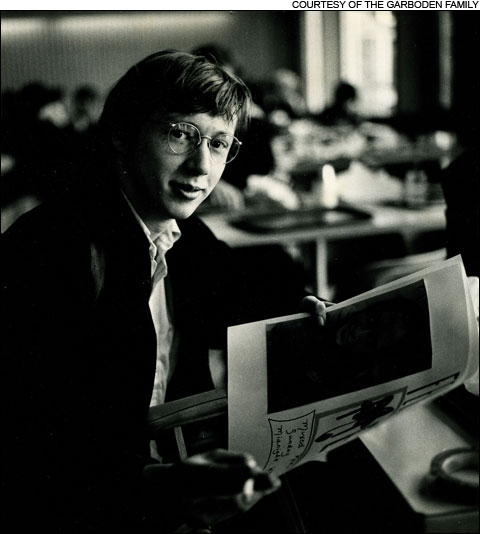
The Garboden Family, specifically, and Boston Journalism in general, lost its' brightest stars. as Cliif Garboden passed away this past week, at young age of 63-years-old.


Mr. Garboden was on the nascent Alternative Weekly Newspaper scene in Boston from the get-go, and. as a testament to the outpouring of testimonials flowing in, he left his profound fingerprint on each and every person who came through the door after him, those who worked with him, those who bumped into him, and, those who had the great fortune to be friends with him.

We took from one of the testimonials, the title of this post, a damned fine epitaph if there ever was one.

One person was our good friend, Barry Crimmins, who had the joy of being both a colleague of, and friend with, Clif Garboden.

It pains me, that at this time, I don't have the words or gestures to repair the hole in Barry's heart.


Clif Garboden represented the best of his native Western Pennsylvania. Arisen from a lyrically hardscrabble upbringing, Clif had the brashness of a union organizer in a world of scabs. His life was a perpetual favor to all of us -- a favor he never called in.
He held together newspapers, organizations, and people with a framework he forged from insight, humility, sparkling wit, precise articulation, doggedly loyal dutifulness to fellow workers, generosity for neighbors, unfailing reliability, and a very healthy contempt for fraudulent and hypocritical authority. He worked harder than anyone, routinely defeated three-touchdown-favorite deadlines and always took the time to show respect and appreciation for the work of others.
There will never be another Clif Garboden, which is why we all must redouble our efforts to emulate a man whose daily life was a great example for others. My most profound condolences go out to Susannah and his wonderful children and to his tens of thousands of friends.
PS- My remarks would have been shorter and better but Clif wasn't here to edit them.

Also read the tremendous (and rather humorous) tribute of Cliff's daughter, Molly Garboden, becoming a journalist herself from the glowing, and inspirational, examples set down by her father.

I had met Cliff a handful of times, at Barry's various shows, over the years.

While it would have been nice to have worked with him, it would have been even better to have had his friendship, which as you read through the testimonials, it's clear everyone lost one of their greatest.

Also Read


Tuesday, February 15, 2011

Jazz Legend George Shearing Dies

I heard this on the radio this morning, and it shadowed the beginning of the day in sadness;

George Shearing dies aged 91

Announcing the death due to heart failure at Shearing's home in Manhattan, his agent, Dale Sheets, said: "He was a totally one of a kind performer. It was something wonderful to see, to watch him work."


I had the good fortune to catch Shearing a few times, both, in club, and festival, settings, and it was always a delicious treat, the crowd hushing to the point you could hear a pin drop, settling in for the unique Shearing sound.

Peter Keepnews explains;

The Shearing sound — which had the harmonic complexity of bebop but eschewed bebop’s ferocious energy — was built on the unusual instrumentation of vibraphone, guitar, piano, bass and drums. To get the “full block sound” he wanted, he had the vibraphone double what his right hand played and the guitar double the left. That sound came to represent the essence of sophisticated hip for countless listeners worldwide who preferred their jazz on the gentle side.

[snip]

By his own estimate Mr. Shearing wrote about 300 tunes, of which he liked to joke that roughly 295 were completely unknown.

He nevertheless contributed at least one bona fide standard to the jazz repertory: “Lullaby of Birdland,” written in 1952 and adopted as the theme song of the world-famous New York nightclub where he frequently performed. Both as an instrumental and with words by George David Weiss, it has been recorded by everyone from Ella Fitzgerald to Bill Haley and His Comets, who improbably cut a version called “Lullaby of Birdland Twist” in 1962


And who else remembers the television commercial, featuring Ray Charles (for a Pioneer LaserDisc), delivering the punchline "I liked it so much, I got one for my friend, George Shearing", the joke being Shearing is also blind.

RIP George Shearing, it was great having you around.


George Shearing - Lullaby of Birdland


And here's a personal favorite;

GEORGE SHEARING playing IT NEVER ENTERED MY MIND


Friday, February 04, 2011

A Conflicted Life Ends ... Tango Actress Maria Schneider Dead at 58

It was quite a surprise to see the name of actress Maria Schneider in the Obit column today.

As much for remembering the long-ago crush, as for how long she has been out of the news, the limelight dimmed for quite some time.


Ms. Schneider died yesterday in Paris “following a long illness,’’ a representative of the Act 1 talent agency said, but declined to provide details.
Ms. Schneider was 19 when she starred opposite Brando in Bernardo Bertolucci’s racy “Last Tango in Paris.’’ In it, she played Jeanne, a young Parisian woman who takes up with a middle-aged American businessman, played by Brando.
Full of explicit sex scenes, “Last Tango’’ was banned in Italy for obscenity for nearly two decades, returning to cinemas there only in 1989. In the United States, the movie still has an NC-17 rating for its sexual content, meaning it can’t be seen by children under 17 years of age.

I'm quite sure anyone over the age of 18, back in 1972 either (A) flocked to the movies to see the film 'Last Tango In Paris", or (B) was aware of the controversy surrounding its' explicit sex scenes, or, (C) rushed to the record store to get the smoking soundtrack, featuring the great saxophonist Gato Barbieri.


I indulged in A, and C of the above.

In her youth, Maria Schneider was incredibly beautiful, which was likely the factor in getting her two big roles (Three years after 'Tango', she starred with Jack Nicholson in 'The Passenger').

All the obituaries mention "a long illness", which included drugs and, as a few referenced, "mental illness".

No doubt, 'Last Tango In Paris' was, perhaps, the beginning of what seemed to be a troubled life.

In the film, Jeanne enters into a brief but torrid affair with a recently widowed American, played by Brando. Their erotically charged relationship, played out in an empty apartment near the Bir Hakeim Bridge in Paris, shocked audiences on the film’s release in 1972, especially a scene in which Brando pins Ms. Schneider to the floor and, taking out a stick of butter, seems to perform anal intercourse on her. The Motion Picture Association of America gave the film an X rating.
The role fixed Ms. Schneider in the public mind as a figurehead of the sexual revolution, and she spent years trying to move beyond the role, and the public fuss surrounding it. “I felt very sad because I was treated like a sex symbol,” she told The Daily Mail of London in 2007. “I wanted to be recognized as an actress, and the whole scandal and aftermath of the film turned me a little crazy and I had a breakdown. Now, though, I can look at the film and like my work in it.”
The famous butter scene, she said, was not in the script and made it into the film only at Brando’s insistence. “I felt humiliated and to be honest, I felt a little raped, both by Marlon and by Bertolucci,” she said. “After the scene, Marlon didn’t console me or apologize. Thankfully, there was just one take.”

Whatever, it still brings about a veil of sadness.

RIP Maria Schneider.


Thursday, January 20, 2011

Sad News, Another Jazz Giant Passes Away ...James Moody Dies at 85

This had happened before.

Once, when living in Los Angeles, and the 24-hour jazz radio station, KKGO, as I awoke, was playing a very long set of Willie Bobo's music, and I knew that had to mean that Willie, who had been ill, passed away.

So, the night-before-last, Jazz With Bob Parlocha comes on at midnight with a set of James Moody's music and that eerie feeling hung in the air, soon confirmed by Parlocha that James Moody, the Sax and Reed player extraordinaire, had passed away, at age 85.


I was fortunate to have seen Moody perform, live, numerous times, and it was always a treat, be it his own band, or if he was a sideman in someone elses.

It was reported that Mr. Moody had pancreatic cancer and chose not to go through the cumbersome treatment (radiation or chemo) and that sounds like how he lived his life, taking things head on, learning as he went along, always trying to be better.

And, thanks to a lark of Moody, playing around with the harmonic structure of 'I'm In The Mood For Love", we have, for posterity, a tune named after Moody, written by the late singer, Eddie Jefferson, and a big hit for King Pleasure;

The song he sang most often had a memorable name and an unusual history. Based on the harmonic structure of “I’m in the Mood for Love,” it began life as an instrumental when Mr. Moody recorded it in Stockholm in 1949, improvising an entirely new melody on a borrowed alto saxophone. Released as “I’m in the Mood for Love” (and credited to that song’s writers) even though his rendition bore only the faintest resemblance to the original tune, it was a modest hit for Mr. Moody in 1951. It became a much bigger hit shortly afterward when the singer Eddie Jefferson wrote lyrics to Mr. Moody’s improvisation and another singer, King Pleasure, recorded it as “Moody’s Mood for Love.”
“Moody’s Mood for Love” (which begins with the memorable lyric “There I go, there I go, there I go, there I go ...”) became a jazz and pop standard, recorded by Aretha Franklin, George Benson, Van Morrison, Amy Winehouse and others. And it was a staple of Mr. Moody’s concert and nightclub performances as sung by Mr. Jefferson, who was a member of his band for many years. Mr. Jefferson was shot to death in 1979; when Mr. Moody, who was in the middle of a long hiatus from jazz at the time, resumed his career a few years later, he began singing the song himself. He never stopped.
Here's Moody singing the tune himself;


And, here's the King Pleasure classic;


Here's Moody, with Dizzy, performing Dizzy's "Kush"

Saturday, May 29, 2010

Dennis Hopper Had Duende

I suppose, it was expected, the MSM obits would highlight the thing of "rebel" and, of course 'Easy Rider'.

That would be for actor Dennis Hopper, who passed away from his battle with cancer.

Why couldn't they just highlight, and dwell on, he was one fine, motherf'ing actor, and a whole bevy of turns.

Dennis Hopper had duende.


Here's the NYT Obit;

Dennis Hopper, 74, Hollywood Rebel, Dies


And, one from Yahoo and the AP;

Dennis Hopper, creator of hit 'Easy Rider,' dies (AP)

If you want the best read, check out Edward Copeland's "Dennis Hopper (1936-2010)";

How many odd turns can one man's life and career take? There's probably no limit, but Dennis Hopper, who died at 74 after a long battle with cancer, took a lot of them: From young actor of film and TV in the 1950s to counterculture icon of the 1960s and '70s (while adding director to his resume and still working with the likes of John Wayne); from nearly unemployable because of drugs to a career comeback in the mid-1980s before frequent returns to TV. On the side, he managed to find time to be a prolific photographer, painter and sculptor. His later years also brought the strangest twist for the hippie hero: he became a Republican. Still, it's his film and TV work that will be his legacy.

And, though he only had a small role, and not a great deal of screen time, his turn in 'True Romance' was perfect, a role only he could have played, it fit the film exquisitely.

True Romance - Sicilians


Tuesday, May 18, 2010

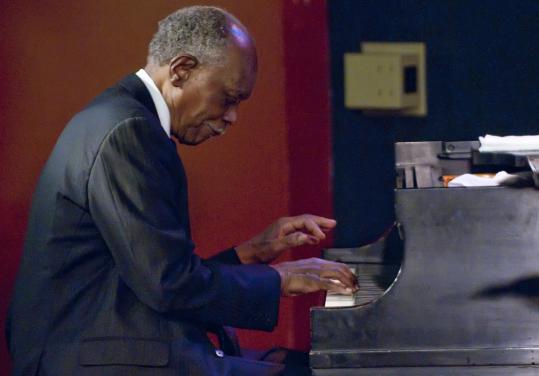
Hank Jones at 91, Legenday Jazz Pianist/Composer/Grammy Winner

Our In Box, this morning, carried the sad news, of the death of the great Jazz pianist, Hank Jones, at age 91, in the Bronx, New York.


We were lucky to have seen Hank Jones perform a handful of times, and it was always tremendous, a consummate professional, you left a Hank Jones show satisfied, and in awe, of his, seemingly, effortlessly manner of employing his gift.

From Dan Heckman, LA Times;

Hank Jones, jazz pianist who spanned styles and generations, dies at 91

Praised for the feather-soft precision of his touch, Jones was equally adept at unleashing the piano's full, orchestral gamut of sounds. Rhythmic lift and propulsive swing were inherent to his playing, whether performing as an accompanist or in a solo setting. And his deep understanding of harmony was the foundation for a skilled mastery of the diverse material in the Great American Songbook.

[snip]

As recently as 2008, Los Angeles jazz audiences heard Jones in a pair of Southland performances — in a trio concert at UCLA and a 90th birthday celebration at the Hollywood Bowl — clearly illustrating that he had long ago ascended to the lofty level he described.

[snip]

Over the next 15 years he was a first-call accompanist for virtually every major jazz artist of the time, backing Fitzgerald, Davis, Young, Adderley, Hawkins, Holiday and Ben Webster, among others. A three-year run with Norman Granz's Jazz at the Philharmonic from 1947 to 1950 matched him with Roy Eldridge, Max Roach and Parker. In 1955, with the release of "The Trio of Hank Jones" (with Wendell Marshall and Kenny Clarke), he began a six-decade sequence of supplementing his busy sideman schedule with recordings under his own name.

Look through your collection of Jazz records (okay, CD's, or downloads), and you may be surprised on just how many that Jones is manning the piano.

Peter Keepnews, NYT;
Mr. Jones spent much of his career in the background. For three and a half decades he was primarily a sideman, most notably with Ella Fitzgerald; for much of that time he also worked as a studio musician on radio and television.

His fellow musicians admired his imagination, his versatility and his distinctive style, which blended the urbanity and rhythmic drive of the Harlem stride pianists, the dexterity of Art Tatum and the harmonic daring of bebop. (The pianist, composer and conductor André Previn once called Mr. Jones his favorite pianist, “regardless of idiom.”)
And, as to that "effortless" way of playing?
“I think the way you practice has a lot to do with it,” he explained. “If you practice scales religiously and practice each note firmly with equal strength, certainly you’ll develop a certain smoothness. I used to practice a lot. I still do when I’m at home.” Mr. Jones was 78 years old at the time.


BBC: Hank Jones obituary


RIP Hank Jones, but do it as you always have - keep on swingin'!

Here's a few tunes you can check out.

Hank Jones - On Green Dolphin Street


Hank Jones Trio 1979 - Bluesette


Hank Jones: Willow Weep For Me


Monday, May 10, 2010

Stormy Weather, Indeed ... RIP Lena Horne

It was sad to discover, via multiple posts, the passing of actress, and Jazz singer, Lena Horne.

I have a handful of her albums (well, now, CD's) and she had a lovely voice, you knew, from the first note or two, that it was Lena Horne singing, so soft, or sultry.


Lena Horne, Singer and Actress, Dies at 92

Ms. Horne was stuffed into one “all-star” musical after another — “Thousands Cheer” (1943), “Broadway Rhythm” (1944), “Two Girls and a Sailor” (1944), “Ziegfeld Follies” (1946), “Words and Music” (1948) — to sing a song or two that could easily be snipped from the movie when it played in the South, where the idea of an African-American performer in anything but a subservient role in a movie with an otherwise all-white cast was unthinkable.

[snip]

Touring Army camps for the U.S.O., Ms. Horne was outspoken in her criticism of the way black soldiers were treated. “So the U.S.O. got mad,” she recalled. “And they said, ‘You’re not going to be allowed to go anyplace anymore under our auspices.’ So from then on I was labeled a bad little Red girl.”

Ms. Horne later claimed that for this and other reasons, including her friendship with leftists like Paul Robeson and W.E.B. DuBois, she was blacklisted and “unable to do films or television for the next seven years” after her tenure with MGM ended in 1950.

[snip]

Ms. Horne’s voice was not particularly powerful, but it was extremely expressive. She reached her listeners emotionally by acting as well as singing the romantic standards like “The Man I Love” and “Moon River” that dominated her repertory. The person she always credited as her main influence was not another singer but a pianist and composer, Duke Ellington’s longtime associate Billy Strayhorn.

“I wasn’t born a singer,” she told Strayhorn’s biographer, David Hajdu. “I had to learn a lot. Billy rehearsed me. He stretched me vocally.” Strayhorn occasionally worked as her accompanist and, she said, “taught me the basics of music, because I didn’t know anything.”

[snip]

Looking back at the age of 80, Ms. Horne said: “My identity is very clear to me now. I am a black woman. I’m free. I no longer have to be a ‘credit.’ I don’t have to be a symbol to anybody; I don’t have to be a first to anybody. I don’t have to be an imitation of a white woman that Hollywood sort of hoped I’d become. I’m me, and I’m like nobody else.”


While that be the standard, boiler-plate obit, we found a few people that came to Lena Horne via other routes.

Like, Edward Copeland;
I know why there's no sun up in the sky and that's because the world has lost the irreplaceable Lena Horne at the age of 92. The actress/singer who helped to break down racial barriers by becoming the first African-American performer to receive a major Hollywood studio contract passed away Sunday night in a Manhattan hospital.

[snip]

The bulk of her career was spent taking that sultry voice to concert halls or appearing as herself in other venues such as That's Entertainment III and sitcoms such as A Different World, The Cosby Show and a particularly memorable Sanford & Son, where Fred tricked her into coming to his house claiming that Lamont was his young, terminally ill child.


Or, Melissa McEwan;
I know the exact moment I saw Lena Horne for the first time. I was 11, and she made a guest appearance on "The Cosby Show," as herself, in an episode where Claire (Phylicia Rashad) took Cliff (Bill Cosby) to see her perform for his birthday. I remember thinking how beautiful and glamorous she was, and falling utterly in love with her voice, which has remained to this day one of my absolute favorites—totally recognizable, totally unmistakable, totally butter.

That hits it, "totally butter."


And, while a bevy of people posted her signature tune, "Stormy Weather" (Dave Itzkoff, over on the NYT Artsbeat, additionally posted a nice one, of Lena Horne and Kermit the Frog singing "It Ain't Easy Being Green"), we took the nod from our friend Dee Dee Gordon, who went with, a classic, a Jazz standard, written by Michael Legrand, for "Les Parapluies de Cherbourg" (which also happens to be one of my all-time favorite tunes).

It's a gem ...

Lena Horne with Gabor Szabo - Watch What Happens (Revised)

Tuesday, May 04, 2010

RIP Lynn Redgrave

The Seekers - Georgy Girl-1968


Lynn Redgrave, Actress and Playwright, Dies at 67

Indeed, for the film that made her a star when she was just 23, “Georgy Girl” (1966), she said she put on 14 pounds to play the title role: a previous generation’s Bridget Jones, a pudgy, gawky young woman whose painfully uncertain self-image leads her to sublimate her own desires to those of her acquaintances. She was nominated for an Academy Award.

Actress Lynn Redgrave dead at 67

Lynn Redgrave, an introspective and independent player in her family's acting dynasty who became a 1960s sensation as the freethinking title character of "Georgy Girl" and later dramatized her troubled past in such one-woman stage performances "Shakespeare for My Father" and "Nightingale," has died. She was 67.

Her publicist Rick Miramontez, speaking on behalf of her children, said Redgrave died Sunday night at her Manhattan apartment. In 2003, Redgrave had been treated for breast cancer.

Her death comes a year after her niece Natasha Richardson died from head injuries sustained in a skiing accident and just a month after the death of her older brother, Corin Redgrave.

Wednesday, April 14, 2010

The Last Bounce

Regular readers of The Garlic know that we pay attention to, and often, riff, on obituaries.

We've had some good ones, such as Stockholm Opera conducter, Sixten Ehrling, Marcel Marceau, Ingmar Bergman, and Baseball pitcher, Don Nottebart.


Today, we add another - George Nissen, the inventor of the trampoline.

I suppose we could riff that they will double-somersault the casket into the grave, or, that the final epitaph would be "BOING!"

We don't know if there is some ritual, or ceremonial platitude, they would give someone who invented the trampoline, so, we'll call it "The Last Bounce'

George Nissen, Father of the Trampoline, Dies at 96

One by one, the trapeze artists topped off their routines by dropping from their high-swinging bars into the net stretched below, then rebounding into somersaults, to the roar of the crowd at the traveling circus in Cedar Rapids, Iowa. And one child in the stands began to wonder: Hey, what if there was a contraption that made it possible to keep on bouncing and flipping?

George Nissen, 16, who was a member of the high school gymnastics and diving teams, was soon tinkering in his parents’ garage, strapping together a rectangular steel frame and a canvas sheet. Though not as springy as he had hoped, he called it a bouncing rig. That was in 1930.

[snip]

Then, in 1937, Mr. Nissen and two friends formed a traveling acrobatics act called the Three Leonardos and began performing across the Midwest and Texas and then in Mexico. It was there that he heard the Spanish word for diving board, el trampolin.

[snip]

Mr. Nissen, who devoted his life to promoting and manufacturing the trampoline, once renting a kangaroo to bounce with him in Central Park, died last Wednesday at a hospital near his home in San Diego. He was 96.

“And at the banquet before the competition he would do a handstand,” Mr. Normile said. “It became a tradition.”

[snip]

“The last time I saw him there was in 2006,” Mr. Normile continued. “He did one of those kind of yoga headstands where you’re on your head and elbows. That was only four years ago; he was 92.”

Dwight Normile for International Gymnast Magazine: Trampoline Inventor George Nissen Passes Away

Inventer of the Week Archive - George Nissen

Fascinating facts about the invention of Trampoline by George Nissen in 1935


Friday, April 02, 2010

Another Great One Gone ... Jazz Guitarist Herb Ellis

We caught a post this morning that, truly, brought with it a good deal of sadness.

Legendary jazz guitarist Herb Ellis has passed.


I had seen him perform live, countless times, back in the 80;s and 90's and it was always, always, an uplifting, in-the-groove, performance.

Emma Brown notes that "Mr. Ellis was a member during the 1950s of the Oscar Peterson trio, which served as the house recording band for Verve Records and accompanied a who's-who of jazz greats, including Louis Armstrong, Roy Eldridge, Harry "Sweets" Edison and Ben Webster."

Legendary is almost an understatement.

From the New York Times;

Herb Ellis, Jazz Guitarist, Is Dead at 88

Mr. Ellis was an early disciple of Charlie Christian, whose deft improvisations, built on long single-note lines, established the template for modern jazz guitar in the 1940s. But he was always more than an imitator: his style mixed the harmonic sophistication of bebop with the earthy directness of the blues and seasoned the blend with a twang more typical of country music than jazz.

While never a major star, he was long a favorite of critics and musicians. In 1959 a fellow guitarist, Jim Hall, praised his “fantastic fire and drive.” In 1990 Gary Giddins of The Village Voice raved about the “easy, loping quality” of his playing, “buoyed by familiar dissonances yet surprisingly free of cliché.”

[snip]

He first attracted wide attention during his five-year stint with Peterson’s popular group, which, like the Soft Winds, included a bassist (Ray Brown) but no drummer. The absence of a percussionist required Mr. Ellis to provide the rhythmic foundation for Peterson’s energetic playing as well as the guitar solos; he did it so well that when he left the trio in 1958, Peterson replaced him not with another guitarist but with a drummer.


Keith Thursby/LA Times - Herb Ellis dies at 88; jazz guitarist

Mike Finnigan - C&L's Late Night Music Club, RIP Herb Ellis

Herb Ellis, on Wikipedia


Here's some tunes, and we highly encourage you to explore, and seek out, some of Herb Ellis's music.


Herb Ellis - Sweet Georgia Brown (1986)


Freddie Green Herb Ellis Orange, Brown and Green


Barney Kessel & Herb Ellis - Flintstones Theme


RIP Herb Ellis!


Tuesday, March 30, 2010

This Was One Cool Cat ... RIP Donald Frey

For anyone, about 10-years-old, or older, in 1965, you couldn't escape drooling over, fantasizing about owning one, daydreaming of tooling around in the hippest, sharpest, coolest-looking automobile on the planet.

We speak, of course, about the Ford Mustang.


News came out yesterday, that the designer of the Mustang, Donald Frey, passed away.

Donald N. Frey, Designer of the Mustang, Dies at 86

Though much of the Mustang was borrowed from other Ford vehicles, including a Falcon chassis, the car developed an identity all its own for a younger generation in search of new looks and experiences. It was designed to appeal to both men and women, had a dash of elegance copied from European sports cars, and featured a galloping steed in the middle of its grille that buyers thought was, well, really cool.

Steve McQueen was almost upstaged by the souped-up Mustang he drove in the movie “Bullitt.’’

Dr. Frey and his team created the car in just 18 months, and expectations were modest when it was introduced on April 17, 1964, at the New York World’s Fair. Ford figured it would sell 80,000 Mustangs in its first year. It sold more than a million in its first two years.

[[snip]

At his death Dr. Frey owned an original Mustang, his son Christopher said, adding that he liked to drive it fast.


From the days that 'Madmen' would envy, Wikipedia offers;
At times besieged by autograph seekers for his role with the Mustang,[1] Frey had been most proud of assisting Ford in including safety improvements including disc brakes and radial tires in their lineup.[1] In 1967, TIME called Frey "Detroit’s sharpest idea man".[1]
Jonathon Ramsey, over on Autoblog, has more;
Frey, who was assistant general manager and and chief engineer of a Ford Motor Company still suffering dry heaves over the Edsel, said he watched GM put bucket seats in the Corvair and rename it Monza, and it began to pick up with customers. There was also the dinner table motivation of his kids telling him his cars stunk.

Frey's first take on the Mustang was a mid-engined convertible in 1962 which, while working with Ford General Manager Lee Iacocca, he would develop into the car introduced to the World's Fair in 1964. When the coupe predicted to sell 80,000 units a year actually sold a million-plus units in its first two years – and then sold and sold and sold – Frey became an American legend. The rest is not just history, it's the present and the future, with the Mustang certain to be a staple in the Ford portfolio for years to come.
All that, and then, what has to be the all-time greatest product placement in history;

Bullitt - Steve McQueen Famous Car Chase


RIP Donald Frey!


Bonus Auto Riffs

Retro Garlic: HuffPo Still Impacting Auto Industry

What's Good For Tesla Motors ...

Breaking News! GM Cancels UAW In Favor of Adopting Huffington Post Business Model ... Celebrities, Auto Enthusiasts and Bloggers To Build Cars For Free; Huge Spike In Profits Forecast

Obit - Avis Founder Pulls Off The Road at 92

Obituary: DeLorean Founder Dies at 80


Friday, March 12, 2010

Another Piece of Childhood Gone ...RIP Merlin Olsen

When I heard the news of his death late last evening, I immediately thought about the three, or four, generations that would only know of Merlin Olsen from his role on "Little House on the Prairie".


Or, maybe. those incongruous FTD commercials.

Those of us slightly older, have a whole different recollection.

Merlin Olsen; Fearsome Foursome anchor became TV actor and NBC commentator

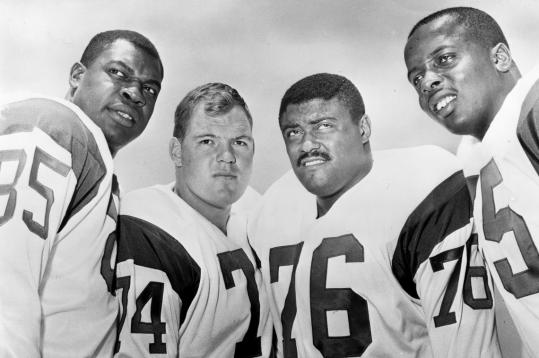
Merlin Olsen, the Hall of Fame tackle who anchored the Los Angeles Rams’ Fearsome Foursome, the line that glamorized defensive play in the NFL, died early yesterday at a hospital in Duarte, Calif. He was 69.

His brother Orrin announced his death, saying Mr. Olsen had been treated for mesothelioma, a form of cancer.

Mr. Olsen was also a longtime color commentator for NBC’s pro football and Rose Bowl telecasts, working with Dick Enberg, and he acted on television, most prominently as the very large and bearded Jonathan Garvey in NBC’s “Little House on the Prairie’’ and in his own series, “Father Murphy.’’

The Rams of the mid-1960s were renowned for defensive linemen who earned a collective nickname a decade before the Pittsburgh Steelers’ Steel Curtain.

[snip]

Mr. Olsen believed that the Fearsome Foursome could have excelled in any era.

“What made the Foursome unique, I think, is that we could have fit in extremely comfortably in the modern game,’’ he told The Orange County Register in 1997. He estimated that the line’s average weight was 275 pounds and said that “there was not a weight lifter in the group.’’

“Imagine how big we’d be today,’’ he added.

“We could all run,’’ Mr. Olsen said. “The other thing we had going for us was a rare chemistry. There was also a very special kind of unselfishness.’’


As a youth in the 1960's, despite growing up in Boston, the lowly AFL, and woeful Boston Patriots, were not on our radar.

We were NFL, baby, all the way.

And, after a brief flirt, with the mid-60's Dallas Cowboys (chiefly due to Chuck Howley, Bob Lily and, at the time, the world's fastest human, Bob Hayes), the Los Angeles Rams became our favorite team, and specifically due to the legendary "Fearsome Foursome" that Merlin Olsen helped anchor.


Olsen, Deacon Jones, Rosey Grier (who would, in 1968, be on the tragic scene, as one of Bobby Kennedy's bodyguards) and Lamar Lundy, there wasn't a better front defensive four in the game, and along with movie-star-looks QB Roman Gabriel, RB Dick Bass, and receivers like Bernie Casey (another LA Ram who would go on to a film and television career), and Jack Snow, the Rams of the late 1960's and very early 1970's were poised to go all the way.

But the brass ring, the newly-created Super Bowl, eluded the LA Rams, thwarted by a new rival out of the frozen tundra, the Minnesota Vikings, and their soon-to-be-legendary front four, the Purple People Eaters (though, the Vikings would go on to lose four Super Bowls).

Whether you remember Olsen as "Jonathan Garvey", or one of the Fearsome Foursome that terrified NFL quarterbacks, it's a sad day, another piece from the childhood memory block chipped away.

Thursday, January 21, 2010

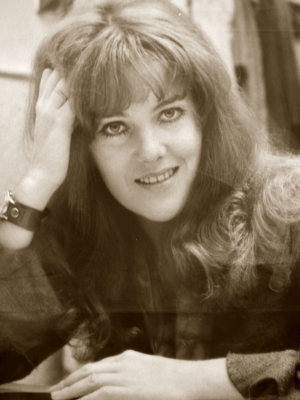
Sad News Today ... The Passing of Kate McGarrigle

I can't properly convey the profound sadness I felt, when scanning through the paper today, passing over the Obits, and seeing that folk singer Kate McGarrigle, of the famed McGarrigle Sisters, passed away.


It's not that I was a devoted fan, and follower, of the McGarrigle Sisters, or Folk Music, overall.

Yet, I had some unusual awareness of them.

They came through Boston, fairly regularly, and with that, I would hear them on NPR, or local radio.

And, it always struck me, on how the McGarrigle Sisters had something beyond cool, something so special, beyond their talents.

Imagine having a career, with your sibling, with something you love, something you had engaged in, virtually, your entire life ...

How many people can claim that?

Born in Montreal and raised in St.-Sauveur-des-Monts, a small town about 50 miles north, Ms. McGarrigle absorbed a range of musical traditions around a musical hearth. Her father, Frank, was of Irish-Canadian stock and steeped in Stephen Foster and turn-of-the-century parlor songs; from her mother, Gaby, she and her two elder sisters — the oldest McGarrigle sister, Jane, was a church organist — learned old songs in French.

“Music was always there at home,” Kate McGarrigle said in a 1997 interview in Sing Out! magazine. “At parties, somebody would get up and sing, and my father would accompany them and sing the harmony. There were lots of friends and uncles and each would get up and give their big song.”

[snip]

Love and family life were central themes in both women’s music, and their songs often addressed romance’s place in the quotidian details of life. Kate McGarrigle’s 1990 song “I Eat Dinner” contemplates love lost among the leftovers, and both sisters’ “Matapedia,” from 1996, is based on a real event in Kate’s life, when an old flame saw her 17-year-old daughter, Martha, and mistook her for her mother.
Martha, like Rufus, has become a noted singer and songwriter. Their father is the singer-songwriter Loudon Wainwright III, who was married to Ms. McGarrigle in the 1970s.

So sad, as Kate McGarrigle was only 63.


Kate and Anna McGarrigle : Ce Matin


Kate and Anna McGarrigle : Cool River


Kate and Anna McGarrigle: Petite Annonce


You can visit the McGarrigle's website here

Wednesday, January 20, 2010

Love Means Never Making Me Read That Book Again

We remember, oh, so well, the mania that erupted, when the book, soon followed by one of the sappiest movie ever made, came out, the buzz, the hosannas for the work ...

And, if you had sisters, holy cow, it was 24/7, over-the-moon, heart-clutching anguish, bemoaning the wait for their "Oliver" to come driving up in a little MG.


You couldn't escape it.

So, we pose a query to you out there.

Who else has gone so far, with so little?

Erich Segal, 72; authored hugely popular ‘Love Story’

He had originally written “Love Story’’ as a screenplay about the star-crossed love between a working-class Italian girl from Radcliffe and a Harvard boy from an old family. The 1970 film, which starred Ali MacGraw and Ryan O’Neal and became a huge hit, was in production before Dr. Segal reworked it as a novel. When “Love Story’’ was released in paperback, it had the largest print order in publishing history at the time, with 4,325,000 copies.

Although Dr. Segal’s work resonated with the public, critics almost uniformly lambasted it. The judges for the National Book Award threatened to resign unless “Love Story’’ was withdrawn from nomination.

“It is a banal book which simply doesn’t qualify as literature,’’ said novelist William Styron, the head judge of the fiction panel.

But thrust into the limelight, Dr. Segal made weekend jaunts to Paris and London, returning to Yale for his classes on classical civilization. Dr. Segal also parlayed his love of running and knowledge of ancient Greece into a job as an ABC TV commentator for the Olympic Games.

If that was today, he'd have his own Reality television show, by now.

What love really means is never making me read that book again